
Lab-Grown vs. Natural Diamonds: What’s the Difference?
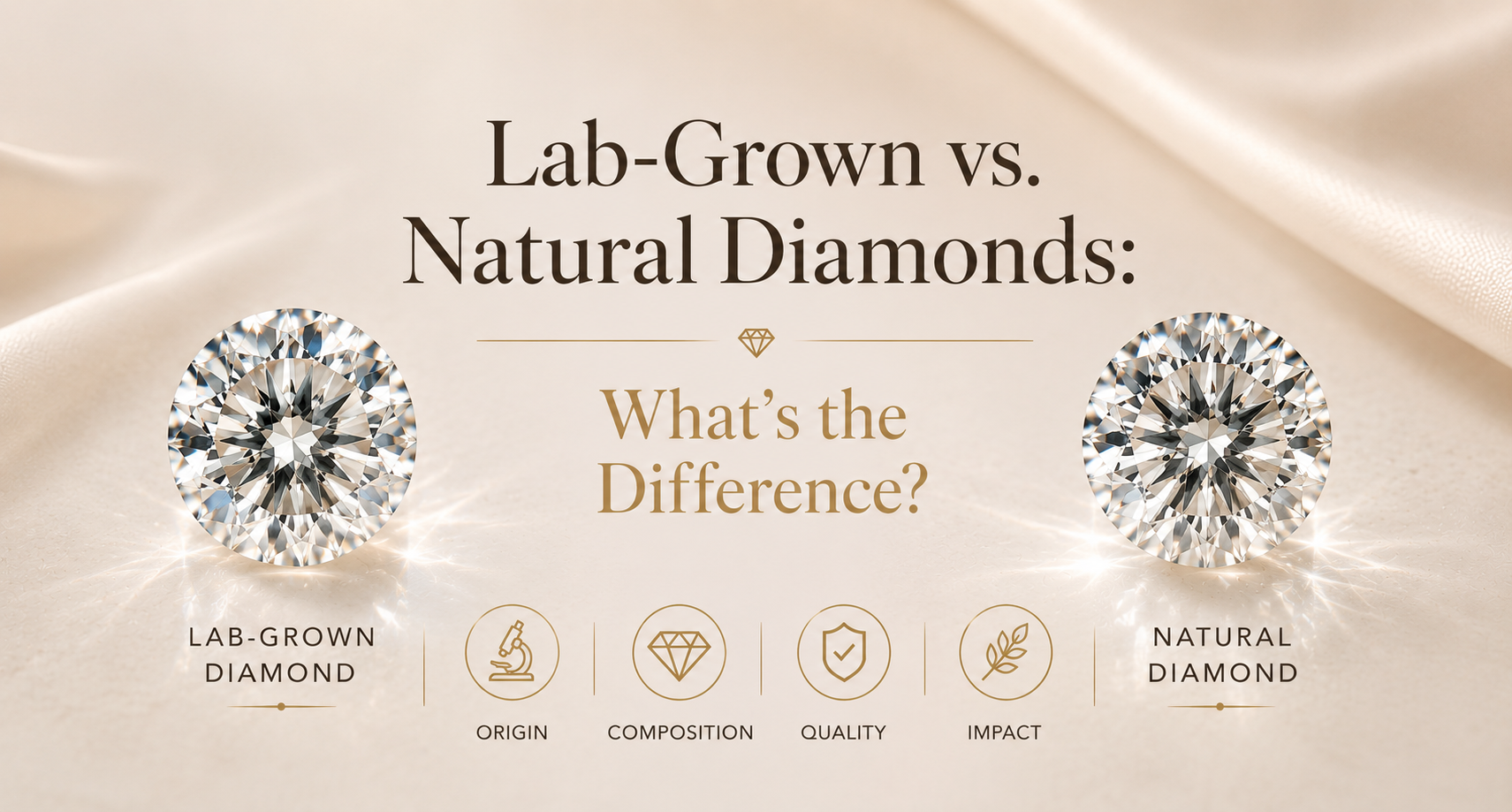
Diamonds have long been a symbol of love, commitment, and timeless beauty. Today, shoppers have more choices than ever, including both natural and lab-grown diamonds. While they may look identical to the naked eye, there are important differences between the two. Understanding these distinctions can help you choose the diamond that best reflects your style, values, and budget.
Here’s what you need to know about lab-grown and natural diamonds.
What Are Natural Diamonds?
Natural diamonds are formed deep within the Earth’s mantle over billions of years under intense heat and pressure. Through volcanic activity, these precious gemstones are brought closer to the surface, where they are eventually mined and transformed into the diamonds we admire today.
Because of their natural origin and rarity, natural diamonds have long been treasured as symbols of enduring love and luxury.
What Are Lab-Grown Diamonds?


Lab-grown diamonds are created in highly controlled laboratory environments using advanced technology that replicates the natural diamond-growing process. The result is a diamond with the same physical, chemical, and optical properties as a natural diamond.
Lab-grown diamonds are real diamonds—not simulants—and offer the same brilliance, durability, and sparkle as their natural counterparts.
Appearance: Can You Tell the Difference?
To the naked eye, lab-grown and natural diamonds are virtually indistinguishable. Both display the same fire, brilliance, and sparkle that make diamonds so desirable.
Even professional jewelers often require specialized equipment to identify whether a diamond is natural or lab-grown.
Durability and Quality
Both natural and lab-grown diamonds rank 10 on the Mohs Hardness Scale, making them the hardest known gemstone. This exceptional durability makes them suitable for everyday wear in rings, necklaces, bracelets, and earrings.
Whether natural or lab-grown, a diamond’s beauty is ultimately determined by the same factors: cut, color, clarity, and carat weight.
Rarity and Value
One of the main differences between natural and lab-grown diamonds is rarity. Natural diamonds are finite resources formed over billions of years, which contributes to their exclusivity and long-standing prestige.
Lab-grown diamonds can be produced in a laboratory within a matter of weeks, making them more readily available and typically more affordable than natural diamonds of similar size and quality.
Sustainability Considerations
Many buyers choose lab-grown diamonds because they are often associated with a smaller environmental footprint compared to traditional diamond mining. However, sustainability can vary depending on the production methods and energy sources used in the manufacturing process.
Natural diamonds, on the other hand, continue to be valued for their unique geological history and natural formation.
Which Diamond Is Right for You?
Choosing between a natural and lab-grown diamond ultimately comes down to personal preference. Some buyers appreciate the rarity and heritage of natural diamonds, while others are drawn to the accessibility and modern innovation of lab-grown diamonds.
Both options offer exceptional beauty and can become treasured pieces that mark life’s most meaningful moments.
Discover Fine Diamond Jewelry at Garo Boyadjian Jewelry
At Garo Boyadjian Jewelry, we are dedicated to helping our clients find jewelry that reflects their personal style and celebrates their most important milestones. Whether you prefer the timeless allure of natural diamonds or the innovation of lab-grown diamonds, our expertly crafted designs are created to be cherished for generations.
